Loading article…

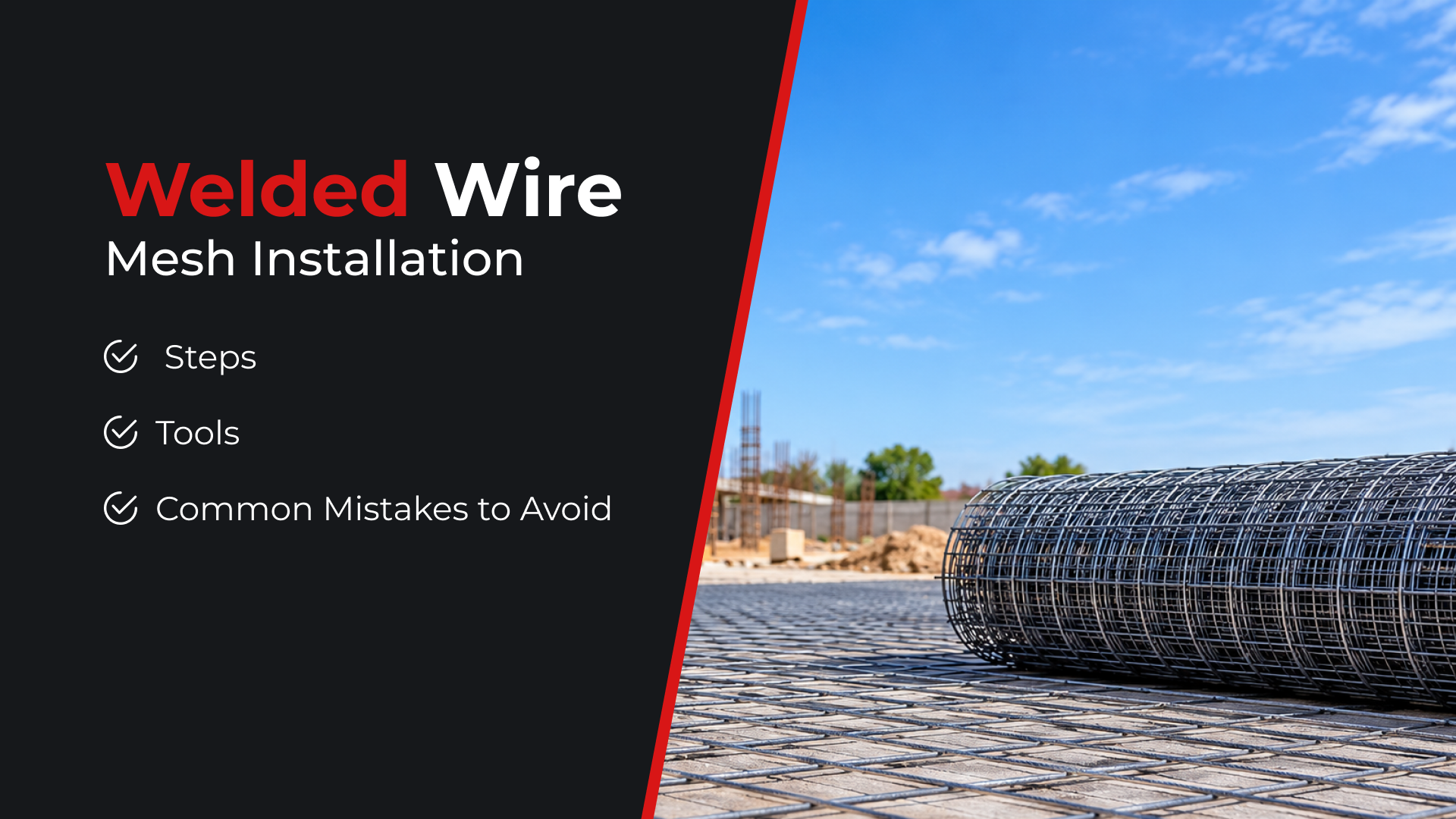
You invest in the best mesh and concrete and yet there are still cracks in your slab after one year. Many times the problem lies not with the materials. It's the way the mesh was installed.
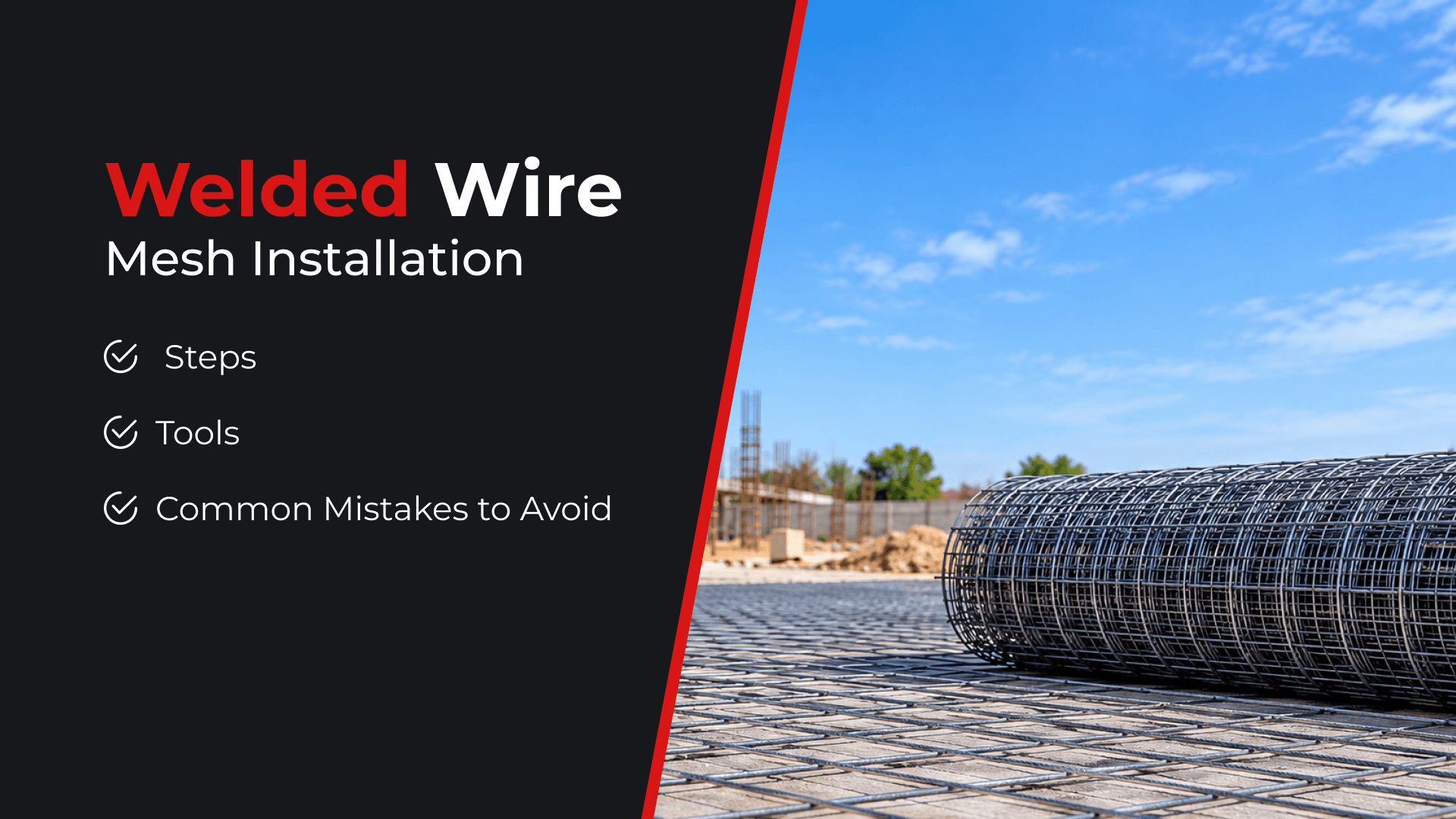
You invest in the best mesh and concrete and yet there are still cracks in your slab after one year. Many times the problem lies not with the materials. It's the way the mesh was installed.
You invest in the best mesh and concrete and yet there are still cracks in your slab after one year. Many times the problem lies not with the materials. It's the way the mesh was installed.
The only problem with welded wire mesh is that, if it is not installed at the proper location, it is not effective. If it does hit the floor, then you've wasted unused steel.
This guide will guide you on how to install it properly, some tools that you need, and any mistakes that you need to avoid.
The mesh should be placed within the concrete and not on the ground.
Chairs or spacers are mandatory.
Overlap all joints and tie every other one.
A well-compacted sub-base matters as much as the mesh.
Use eye protection and gloves. Cut wire is sharp.
Concrete has a high compressive strength and a low tensile strength. Mesh takes up that pulling force and keeps small cracks tight instead of letting them spread.
However, only mesh can perform this task at the proper altitude. Too low, and it sits where it adds almost nothing. If it is too high, water seeps into the steel and causes rusting, which may lead to flaking away of the surface. Proper installation will safeguard your finances and your completed surface.
Welded wire mesh is a mesh grid made of steel wires welded together at each junction. It's available as flat sheets or rolls and is sold according to the spacing between the wires, e.g., 6 x 6 squares.
You will see it in:
Driveways, patios or garage floors
Light duty slabs and sidewalks
Precast panels and screeds
Fencing, cages and enclosures for animal containment and management purposes, including welded wire mesh fence installations.
One Honest Note: For heavy loads, structural slabs and foundations, the engineer will most likely specify rebar. If project drawings are available, always follow them.
Before you begin, collect all of the items
Welded wire mesh of the proper size and gauge
Bolt or wire cutters
Tie wire and a tie tool or pliers
Chairs made of plastic or wire, or concrete spacers
Tape measure, string line and marker
Work gloves, safety glasses and sturdy boots
For fencing, posts, clips or staples, and a post hole digger
Quality installations are a series of simple steps performed in sequence. Follow them each in turn and then your mesh will be where it can really work.
Measure length and width, plus provide for overlaps and cuts. It is good practice to buy 5 to 10 percent more mesh. Also pay attention to slab thickness, because it determines the height of your chairs.
A good base is as important as the mesh. No matter how much steel is placed in the soil, it cracks the slab when the soil moves. Smooth and compact the gravel and then install a vapor barrier, if required for your project.
Cut using bolt cutters, maintaining a 2 inch margin between the mesh and the slab edges and forms. Straighten any curled ends before putting in. Mesh rolls are known to bow upward and a bowed sheet will not remain at the proper height.
This is the most important step.
Position the chairs or spacers so that the mesh is in the middle to upper portion of the slab. Place at least 2 inches below the top surface. Make sure supports are not too far apart, otherwise, the mesh may droop between them.
Many crews spread mesh on the ground and intend to “pull it up” when pouring. This rarely works. The mesh usually ends up at the bottom of the slab, where it does very little.
Overlap sheets at least one square at a place where two sheets come together, or as your project may require.
For slabs around the house, the "rule of thumb" is roughly 6 inches. Tie the overlap with wire at regular points so the sheets stay together while concrete is poured.
One of the most common problems that leads to cracks along sheet joints is due to weak overlaps.
Install fencing by first setting posts and then stretching the mesh tight between the posts. Secure it periodically with clips or fasteners.
This method is commonly used for wire mesh fencing, where properly secured panels help maintain a stable and consistent fence line. Avoid bending and misalignment of the panels to maintain a neat fence and prolong the lifespan.
Pour carefully. Do not walk on the mesh and do not drop concrete close to the mesh. If the mesh slips off its chairs during the pour, stop and reset it right away.
Before the concrete sets, make sure to check three things, that:
The mesh is not on the ground.
The overlaps are tied.
There is no material on the forms.
Welded wire mesh is easy to work with but could have sharp ends or may spring back. Here are some simple practices that will help you stay safe at your location:
Cut ends are sharp, and mesh can spring back when released.
Use gloves, safety glasses and long sleeves.
Use two people to lift long sheets.
Keep walkways clear, because mesh on the ground is a real trip hazard.
Be aware of sharp wire ends on a completed fence line as well.
Construction teams working in Dubai should also follow the applicable Dubai construction safety guidelines when handling materials and carrying out onsite installation activities.
Most of the problems with mesh arise from small errors in the setup before pouring. These are the ones that cause the highest number of cracks, rust and repair costs.
This is the most typical error. On the ground the mesh is concentrated within the slab, and it does almost nothing. Always lift it with chairs or spacers.
If the steel is exposed near the top, it gets wet and thus forms rust. Maintain sufficient cover, at least two inches, to keep the mesh protected.
Mesh is suitable for light duty slabs. If performing heavy vehicle or structural work, consult an engineer prior to the selection of your reinforcement.
Cracking due to poor soil is not remediable with any mesh. Thoroughly compact the soil prior to the installation of anything.
When stepped on, weak plastic chairs may break. Ensure that sound supports are used and avoid traffic on the mesh during the pour.
To cure concrete, ensure it is kept damp and protected during the first days of curing. Take action early to seal control joints and small cracks, preventing water access to the steel. Watch for any surface rust staining, as it may be that the mesh is placed too near the top.
For fencing, inspect the clips, panels and installation hardware every six months or once a year. Tighten loose fasteners, and treat any rust spots early. Galvanized or coated mesh lasts much longer outdoors and is a practical choice for long lasting mesh fencing.
Welded wire mesh is simple, affordable, and effective, but only when it is installed correctly. Plan your quantities, prepare the base, lift the mesh on chairs, overlap and tie every joint, and protect it with proper cover
For load bearing or large projects, consult a professional before pouring. A little checking now can mean a big repair dollar later.
For projects requiring new perimeter fencing, Mahraj Fencing provides fence supply and installation services across Dubai, helping businesses select and install suitable fencing systems for their sites.
It reinforces driveways, patios, sidewalks, garage floors, and precast panels. It is also used in fencing, stucco backing and in gabion baskets
Typically, yes, for light duty slabs. When you install a mesh, there is also no loss of installation time, which saves you material and labor.
Not fully. It is good for stabilizing cracks so that they remain narrow, and good base prep and control joints will help prevent cracks.
Move lap sheets out 1 full square or approximately 6 inches on many residential slabs. If your project specifications call for more, always proceed with the additional requirements.
Not always. Control joints alone work well on a 4 inch slab over firm, compacted ground, but mesh is needed if vehicles are to be driven on it or if the ground is weak.
When protected by a proper concrete cover, it may endure for the life of the slab. Galvanized mesh is a suitable fencing option outdoors and, with a little care, can last for many years.