Loading article…

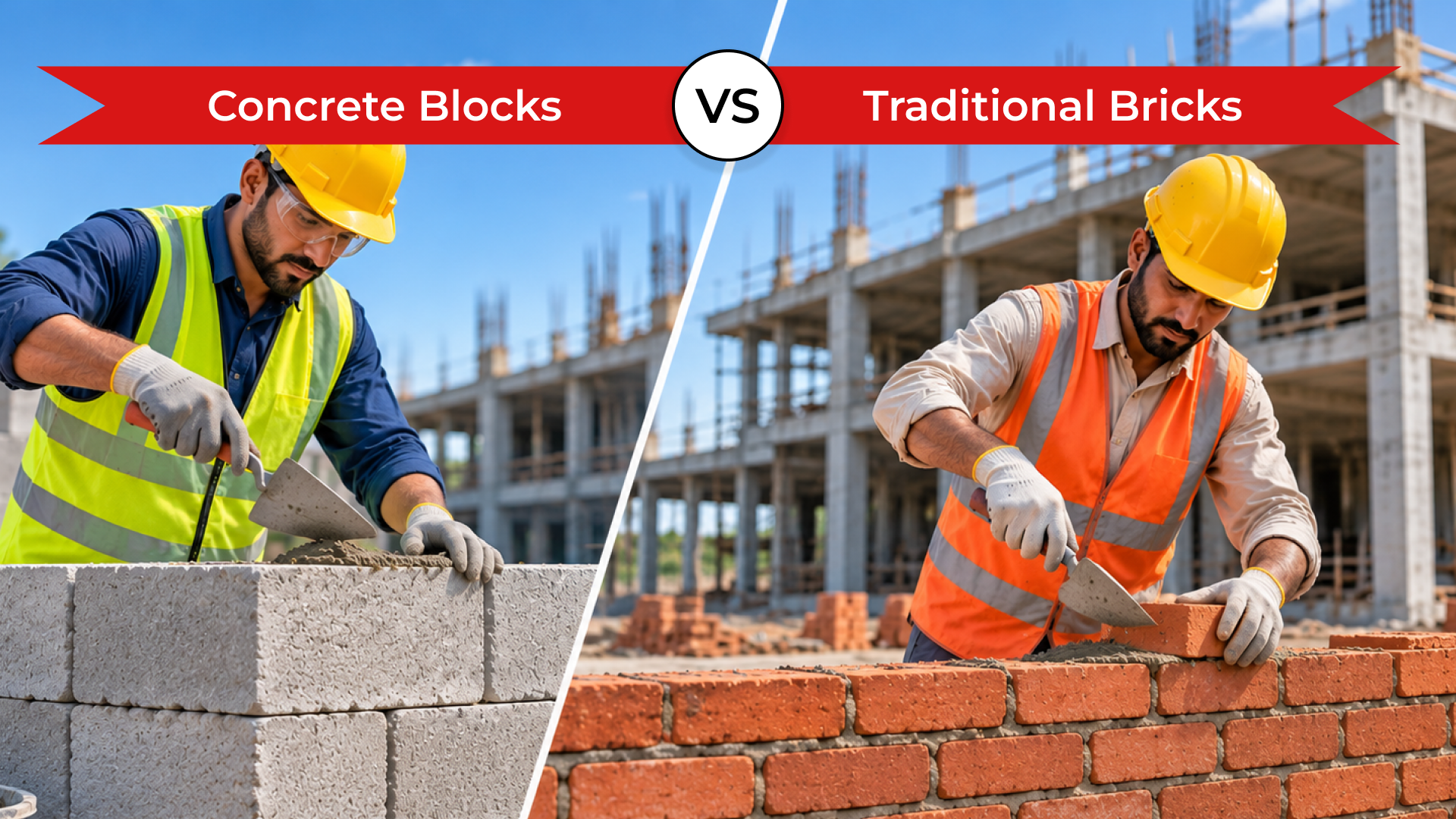
Need to build a house, garden wall or boundary wall? You will eventually have to make the decision, is it concrete blocks or traditional bricks?
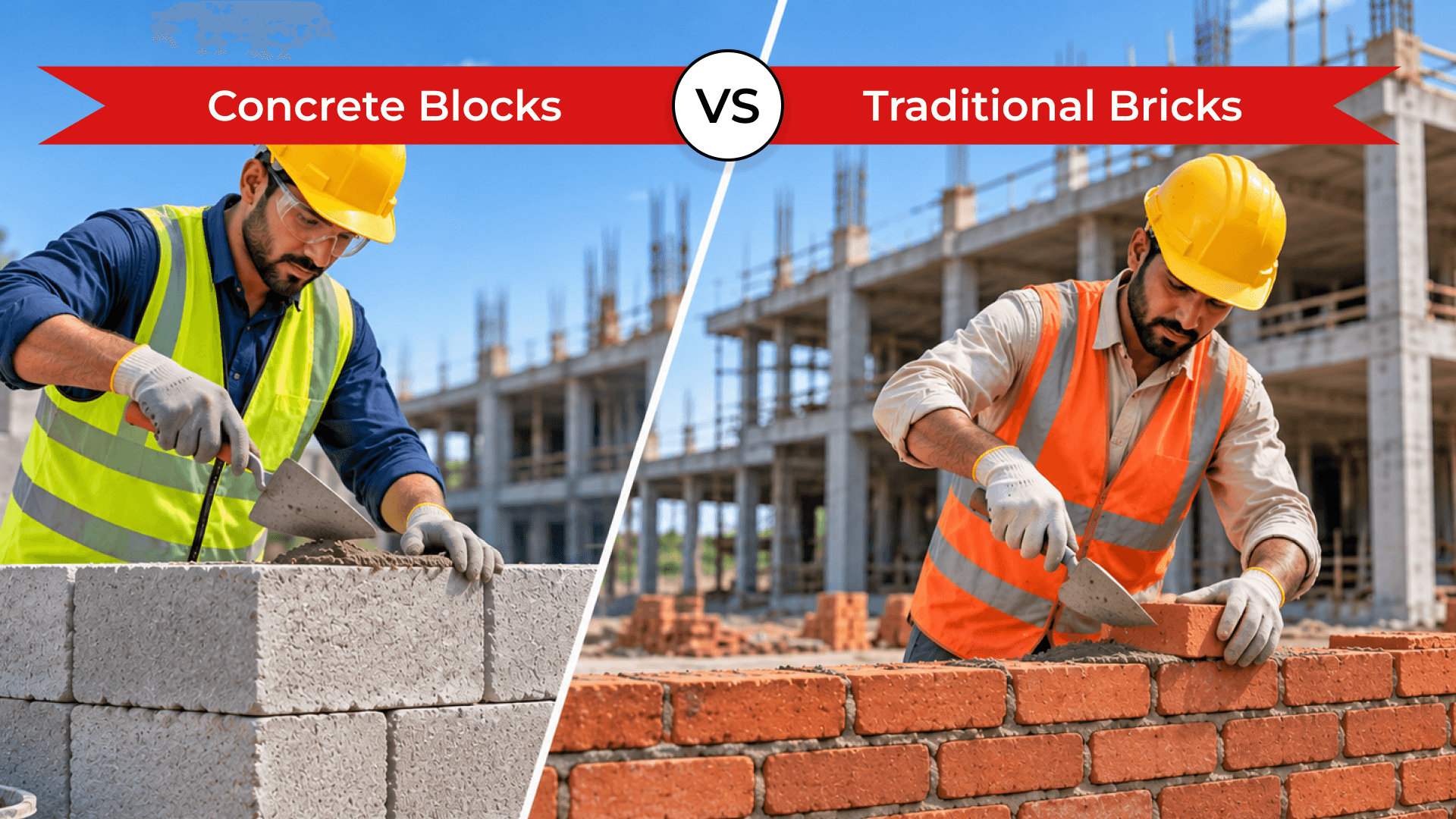
Need to build a house, garden wall or boundary wall? You will eventually have to make the decision, is it concrete blocks or traditional bricks?
Need to build a house, garden wall or boundary wall? You will eventually have to make the decision, is it concrete blocks or traditional bricks?
Both have been utilized for generations and both will construct strong walls. But they're not equal. They vary in size, weight, price, appearance, heat and noise resistance and waterproofness.
Here, each distinction is clearly explained in simple terms, so you can make your decision with confidence.
Concrete blocks are much bigger, so walls go up faster.
Bricks provide a classic look, a natural long lasting color, and are smaller.
Brick typically costs more per wall, while blocks are cheaper.
They are both fire resistant. With minimal maintenance, bricks tend to last longer.
It is a matter of choice according to budget, climate and design.
Concrete blocks, also known as concrete masonry units (CMUs), are large building materials. These blocks are made from cement, sand, gravel, and water.
The mix is poured into molds and compressed or vibrated so it becomes dense. The blocks are then cured, which means they are kept damp and rest for days while they gain strength. Unlike bricks, they are not baked in a kiln.
Concrete blocks come in several forms, each suited to a different job on site. Here are the main different types of blocks you'll come across.
Hollow Blocks: Blocks with holes. They are light in weight and can be reinforced with steel and concrete for added strength.
Solid Blocks: Dense and heavy, used where greater strength is required. These solid concrete blocks are commonly used for walls that need a denser masonry unit.
Lightweight Blocks: Work with lightweight materials so they're easier to lift and are more insulating.
Aerated (AAC) Blocks: Lightweight and filled with tiny air pockets, thus reducing insulation.
Decorative Blocks: Have a split face or smooth to be used on visible walls.
A concrete cover block is also used in construction, but it serves a different purpose. It maintains the required concrete cover around steel reinforcement rather than forming part of a masonry wall.
The bricks are one of the most ancient building materials in the world. They have been made for thousands of years.
Clay bricks are produced by moulding clay into brick shapes, drying, and firing them at extremely high temperatures (900 to 1100°C) in a kiln. This firing toughens the clay and imparts color to bricks, usually red, orange or brown in color.
Bricks also come in a few standard types, each suited to a different part of the build. Here's a quick look at the most common ones.
Common (building) Bricks: Made for general walling purposes and are usually plastered.
Facing Bricks: Designed to look good and to remain exposed.
Engineering Bricks: Have very low water absorption, are very dense, and are very strong.
Fly ash Bricks: In some regions, a more eco friendly option, which is made from industrial by-products.
Now that you know what each material is, here's how they actually compare on the factors that matter most for your project.

A standard UK-style brick measures approximately 215 × 102.5 × 65 mm (sizes vary by country) and weighs around 2 to 3.5 kg. A typical concrete block measures 400 × 200 × 200 mm and a hollow one weighs about 17 to 26 kg
Concrete block sizes vary by type and application. In the UAE, hollow block size in UAE depends on wall thickness and solid block size in UAE depends on the intended application.
One concrete block covers the same wall area as several bricks, making construction faster. However, due to their heavier weight, concrete blocks require proper handling, transportation, and offloading during construction.
When constructed correctly, both materials can be quite strong. The good clay bricks can withstand heavy loads and can last for over a century if they are built and maintained well.
Concrete blocks are also very strong, particularly if cores are filled with reinforced concrete. One thing brick does have going for it is that the color and surface are baked into the brick, making it age gracefully.
If left unprotected, blocks can wear or stain more quickly. Type is not as important as quality, always purchase tested units that are well constructed.
The price is not just the unit; material and labor make a difference in the bill. Let’s compare the two on each.
Material Costs
Concrete blocks will range in price but in many regions will be less expensive per square meter of wall because more square meter is covered by each block. Premium facing bricks typically come with high prices.
Labor and Installation Costs
With fewer units and less mortar, labour time is reduced. Bricklaying is slower due to the large number of bricks needed. Brick usually does not require any plaster or paint, yet it can be a cost saving later.
When it comes to speed, blocks win. A mason can construct a wall much quicker using larger units. But lifting hollow blocks for the entire day is heavy, and they are not as easy to cut cleanly.
Bricks are more manageable and easier to cut to shape and work around curves, corners and detailed areas.
5. Thermal Insulation and Energy Efficiency
The thermal mass properties of both materials mean they take up heat slowly and give it up slowly. This helps to maintain more stable temperatures inside.
The cores of the hollow blocks can be filled with insulation and the blocks contain air in the cores. The best insulators are lightweight and AAC blocks. Brick walls also make excellent performers, particularly double layer (cavity) walls with an air gap.
The thicker and heavier the wall, the better the sound is absorbed. Solid or filled blocks and thick brick walls are good sound absorbers. Both materials are not combustible for fire.
Depending on wall thickness, brick walls can achieve fire ratings of several hours, and well-built block walls also perform strongly.
Both materials absorb water, but not all of it. Bricks are typically weather resistant, especially engineering bricks. In wet climates, concrete blocks may be more porous and may need to be sealed, painted, or plastered.
Both can display “efflorescence,” white salt stains that may be cleaned but are generally harmless.
Bricks can be found in a variety of colors and patterns and can provide a classic, warm appearance. By default, blocks are plain but can be painted, plastered, or decorated with textures.
When it comes to a wall that is both visible and natural, it is difficult to beat brick. If you are going to plaster, blocks are a good
Brick walls require relatively little maintenance but may require repairing every few decades. To maintain protection and a fresh appearance, block walls might require repainting or resealing every few years.
Both have a footprint. Making bricks is energy intensive. Cement, the main ingredient in blocks, is a major source of carbon emissions worldwide.
More sustainable building options include fly ash bricks, AAC blocks, and recycled content blocks. Using local materials also cuts transport emissions. A wall that has been in place for generations is sustainable
Let's quickly compare the characteristics of concrete blocks with bricks discussed above:
Here are some questions you should ask yourself:
What is my budget? Tight budget and big walls? Blocks help.
Is the finish visible or not? If you're looking for a natural appearance and don't desire to paint, select bricks.
At what speed should it be constructed? Blocks save time.
What is my climate? For extremely damp environments, choose closely packed bricks or firmly sealed blocks.
Does it bear loads or is it decorative? Reinforced blocks are used for structural work, and bricks are used for facades and details.
In some buildings, concrete blocks form the inner structure while bricks create the outer facing.
There is no one standout winner. The advantages of concrete blocks are speed and savings, while bricks include beauty and long lasting performance.
Make sure you match the material to your budget, climate and design and always hire quality tested material and skilled workers.
For major structural work, check with a local engineer or building professional. Regardless of material, a well-planned wall will last for decades.
Purchase products from reputable masonry companies like Mahraj Fencing or hardware stores. Always consult the strength grade.
The blocks are typically less expensive and quicker. Poured concrete is cost effective only for large jobs.
Yes! The structure is usually made from blocks and the outer face is made from bricks.
The curing time of blocks is about 7 to 28 days. Wait till they're stronger to use them.
Dense bricks are suitable for humid and coastal areas. Sealed blocks have a long lifespan.
Need to build a house, garden wall or boundary wall? You will eventually have to make the decision, is it concrete blocks or traditional bricks?
Both have been utilized for generations and both will construct strong walls. But they're not equal. They vary in size, weight, price, appearance, heat and noise resistance and waterproofness.
Here, each distinction is clearly explained in simple terms, so you can make your decision with confidence.
Concrete blocks are much bigger, so walls go up faster.
Bricks provide a classic look, a natural long lasting color, and are smaller.
Brick typically costs more per wall, while blocks are cheaper.
They are both fire resistant. With minimal maintenance, bricks tend to last longer.
It is a matter of choice according to budget, climate and design.
Concrete blocks, also known as concrete masonry units (CMUs), are large building materials. These blocks are made from cement, sand, gravel, and water.
The mix is poured into molds and compressed or vibrated so it becomes dense. The blocks are then cured, which means they are kept damp and rest for days while they gain strength. Unlike bricks, they are not baked in a kiln.
Concrete blocks come in several forms, each suited to a different job on site. Here are the main different types of blocks you'll come across.
Hollow Blocks: Blocks with holes. They are light in weight and can be reinforced with steel and concrete for added strength.
Solid Blocks: Dense and heavy, used where greater strength is required. These solid concrete blocks are commonly used for walls that need a denser masonry unit.
Lightweight Blocks: Work with lightweight materials so they're easier to lift and are more insulating.
Aerated (AAC) Blocks: Lightweight and filled with tiny air pockets, thus reducing insulation.
Decorative Blocks: Have a split face or smooth to be used on visible walls.
A concrete cover block is also used in construction, but it serves a different purpose. It maintains the required concrete cover around steel reinforcement rather than forming part of a masonry wall.
The bricks are one of the most ancient building materials in the world. They have been made for thousands of years.
Clay bricks are produced by moulding clay into brick shapes, drying, and firing them at extremely high temperatures (900 to 1100°C) in a kiln. This firing toughens the clay and imparts color to bricks, usually red, orange or brown in color.
Bricks also come in a few standard types, each suited to a different part of the build. Here's a quick look at the most common ones.
Common (building) Bricks: Made for general walling purposes and are usually plastered.
Facing Bricks: Designed to look good and to remain exposed.
Engineering Bricks: Have very low water absorption, are very dense, and are very strong.
Fly ash Bricks: In some regions, a more eco friendly option, which is made from industrial by-products.
Now that you know what each material is, here's how they actually compare on the factors that matter most for your project.
A standard UK-style brick measures approximately 215 × 102.5 × 65 mm (sizes vary by country) and weighs around 2 to 3.5 kg. A typical concrete block measures 400 × 200 × 200 mm and a hollow one weighs about 17 to 26 kg
Concrete block sizes vary by type and application. In the UAE, hollow block size in UAE depends on wall thickness and solid block size in UAE depends on the intended application.
One concrete block covers the same wall area as several bricks, making construction faster. However, due to their heavier weight, concrete blocks require proper handling, transportation, and offloading during construction.
When constructed correctly, both materials can be quite strong. The good clay bricks can withstand heavy loads and can last for over a century if they are built and maintained well.
Concrete blocks are also very strong, particularly if cores are filled with reinforced concrete. One thing brick does have going for it is that the color and surface are baked into the brick, making it age gracefully.
If left unprotected, blocks can wear or stain more quickly. Type is not as important as quality, always purchase tested units that are well constructed.
The price is not just the unit; material and labor make a difference in the bill. Let’s compare the two on each.
Material Costs
Concrete blocks will range in price but in many regions will be less expensive per square meter of wall because more square meter is covered by each block. Premium facing bricks typically come with high prices.
Labor and Installation Costs
With fewer units and less mortar, labour time is reduced. Bricklaying is slower due to the large number of bricks needed. Brick usually does not require any plaster or paint, yet it can be a cost saving later.
When it comes to speed, blocks win. A mason can construct a wall much quicker using larger units. But lifting hollow blocks for the entire day is heavy, and they are not as easy to cut cleanly.
Bricks are more manageable and easier to cut to shape and work around curves, corners and detailed areas.
5. Thermal Insulation and Energy Efficiency
The thermal mass properties of both materials mean they take up heat slowly and give it up slowly. This helps to maintain more stable temperatures inside.
The cores of the hollow blocks can be filled with insulation and the blocks contain air in the cores. The best insulators are lightweight and AAC blocks. Brick walls also make excellent performers, particularly double layer (cavity) walls with an air gap.
The thicker and heavier the wall, the better the sound is absorbed. Solid or filled blocks and thick brick walls are good sound absorbers. Both materials are not combustible for fire.
Depending on wall thickness, brick walls can achieve fire ratings of several hours, and well-built block walls also perform strongly.
Both materials absorb water, but not all of it. Bricks are typically weather resistant, especially engineering bricks. In wet climates, concrete blocks may be more porous and may need to be sealed, painted, or plastered.
Both can display “efflorescence,” white salt stains that may be cleaned but are generally harmless.
Bricks can be found in a variety of colors and patterns and can provide a classic, warm appearance. By default, blocks are plain but can be painted, plastered, or decorated with textures.
When it comes to a wall that is both visible and natural, it is difficult to beat brick. If you are going to plaster, blocks are a good
Brick walls require relatively little maintenance but may require repairing every few decades. To maintain protection and a fresh appearance, block walls might require repainting or resealing every few years.
Both have a footprint. Making bricks is energy intensive. Cement, the main ingredient in blocks, is a major source of carbon emissions worldwide.
More sustainable building options include fly ash bricks, AAC blocks, and recycled content blocks. Using local materials also cuts transport emissions. A wall that has been in place for generations is sustainable
Let's quickly compare the characteristics of concrete blocks with bricks discussed above:
Here are some questions you should ask yourself:
What is my budget? Tight budget and big walls? Blocks help.
Is the finish visible or not? If you're looking for a natural appearance and don't desire to paint, select bricks.
At what speed should it be constructed? Blocks save time.
What is my climate? For extremely damp environments, choose closely packed bricks or firmly sealed blocks.
Does it bear loads or is it decorative? Reinforced blocks are used for structural work, and bricks are used for facades and details.
In some buildings, concrete blocks form the inner structure while bricks create the outer facing.
There is no one standout winner. The advantages of concrete blocks are speed and savings, while bricks include beauty and long lasting performance.
Make sure you match the material to your budget, climate and design and always hire quality tested material and skilled workers.
For major structural work, check with a local engineer or building professional. Regardless of material, a well-planned wall will last for decades.
Purchase products from reputable masonry companies like Mahraj Fencing or hardware stores. Always consult the strength grade.
The blocks are typically less expensive and quicker. Poured concrete is cost effective only for large jobs.
Yes! The structure is usually made from blocks and the outer face is made from bricks.
The curing time of blocks is about 7 to 28 days. Wait till they're stronger to use them.
Dense bricks are suitable for humid and coastal areas. Sealed blocks have a long lifespan.